Category: Blog Posts

  • Content Marketing Mistakes Startups Make

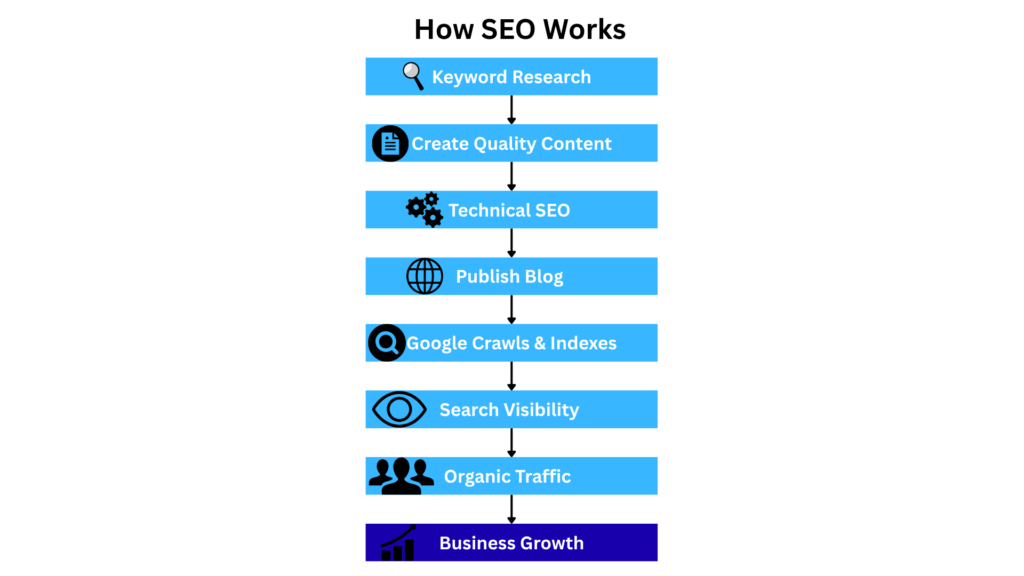
    In the era of digital marketing, content creation has become the foundation of online marketing. Creating engaging content helps startups attract their target audience and build trust with potential customers. It is important for startup founders to create quality content and use it as a long-term marketing strategy. High-quality content is also easier for Google to crawl and index, which can improve a website’s visibility in search results. As a cost-effective marketing approach, content marketing helps startups reach more people and drive organic traffic to their websites.

    A content must be seen as a tool to make an impression on the readers minds, but startups often make mistakes while creating a content. In this article we will explore the mistakes that startups make and learn how to minimize them during content creation.

    What Is Content Marketing?
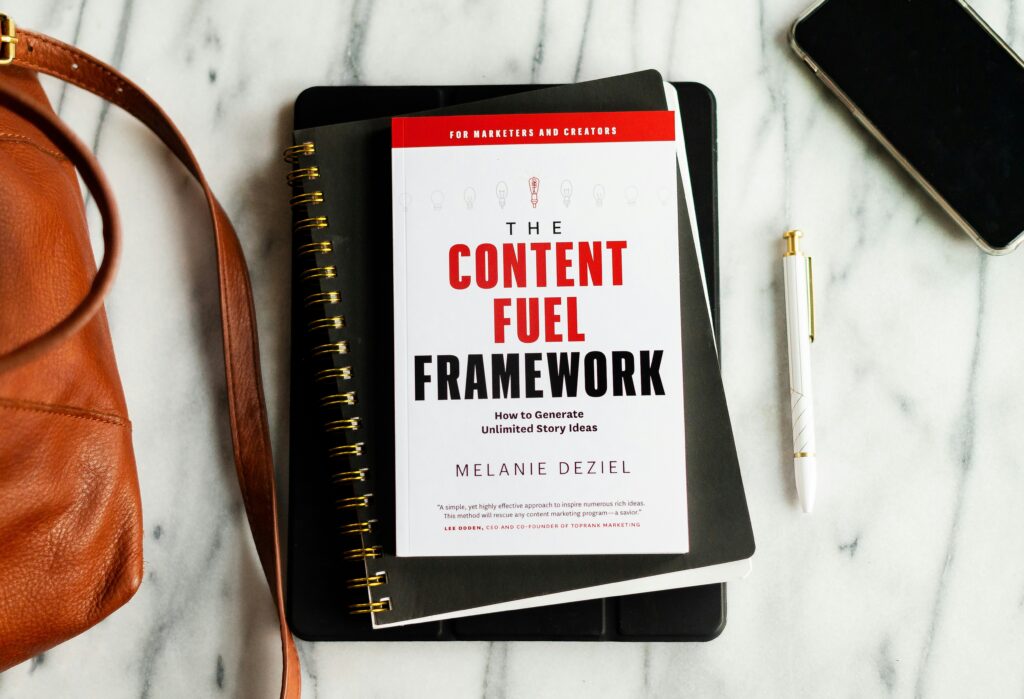
    Content Marketing is the process of creating and sharing valuable content such as blogs, videos, social media posts, infographics, and articles to attract and engage potential customers. Unlike traditional marketing, which mainly relies on paid advertisements, content marketing focuses on educating and helping customers. It is one of the most cost-effective marketing strategies for startup founders because it helps build trust, increase brand awareness, and attract organic traffic over time.

    How content can attract and educate potential customers

    Imagine a startup founder opening an organic grocery store that sells products supplied by certified organic vendors. Since the business is new, the founder may not have a large budget to spend on television, newspaper, or billboard advertisements. Instead, the founder decides to use content marketing to promote the business.

    The website regularly publishes blog posts explaining the health benefits of organic food, while social media pages share videos showing how the products are grown and supplied by trusted vendors. The website also introduces the vendors and explains where the products come from. This helps customers understand the quality of the products and builds confidence in the brand.

    Although the business may not receive many customers immediately, consistently creating useful content can gradually build trust, increase brand awareness, and attract loyal customers over the long term.

    Why Content Marketing Is Important for Startups

    Startups can achieve the following benefits through content marketing:

    • Build Trust

    Customers are more likely to buy products from businesses they trust, regardless how good the product is. Developing content about the product show casing its advantages and usage capabilities over the website builds trust in customers. Referring to the example of the organic products store it built customer trust by posting videos showing how the products are grown and supplied by trusted vendors and explaining the health benefits of organic products. Similarly, startups need to focus on content planning to project the value of product to the customers who purchase it.

    • Attracts potential customers

    Once trust is established, startups need to convert interested visitors into potential customers. Conversion data serves as an indicator of how well the content engages and persuades potential customers. Content marketing is not a one-time activity; it is a continuous process of publishing valuable content on websites and social media platforms. This approach attracts potential customer while reducing marketing costs for startup founders.

    • Increases brand visibility

    New startups often struggle because very few people know they exist. Valuable content increases a startup’s brand visibility by helping more people discover its products, services, and expertise. As brand visibility increases, startups can strengthen relationships with existing customers while reaching new potential customers. Content marketing plays an important role by increasing awareness of the startup’s products, services, and brand among its target audience.

    • Supports long-term growth

    Sustainable growth requires consistent effort over time. Sometimes, startup founders focus so much on their current challenges that they forget to plan for the future of their organization. Every business should have a clear roadmap that outlines where it wants to be year after year. Planning for long-term growth is just as important as understanding the organization’s current position in the market. Valuable content serves as an engine for long-term growth by continuously attracting customers, building trust, and strengthening the startup’s brand.

    Common Content Marketing Mistakes Startups Make

    • Creating content without understanding the target audience

    The purpose of developing a content is to serve the target audience with useful information. To serve them well startups should first identify their target audience and then understand their behavior using tools such as Google Analytics, Google Trends, LinkedIn, and Google forms (customer survey).

    • Focusing only on selling

    Startups often get carried away with planning content strategies. The primary purpose of the content is to solve the customer’s problem. In sales there is saying don’t try to sell, try to help the customers this stands true for even content marketing. Sales become a natural by-product of providing value to customers.

    • Publishing content inconsistently

    There are millions of pieces of content available on the internet, and thousands of new pieces are published every day. People often forget older content and pay more attention to recently published content. Publishing content regularly keeps the existing customer engaged; these existing customers can pull new customers with word of mouth.

    • Creating content without a clear goal

    For startups, every content strategy should have a clear purpose and a defined outcome. Having a clear goal helps content creators plan, measure, and improve their content strategy.

    • Ignoring quality

    Planning the structure of content is important, but the quality of what goes into it matters just as much. High-quality content includes:

    1. Clear purpose
    2. Accurate information
    3. Original content
    4. Good layout
    5. Relevant visuals
    6. Easy navigation
    7. Simple language
    8. Actionable takeaways
    9. Clear call to action
    • Trying to be present on every platform

    Startups often try to build recognition by creating content for every available platform. This strategy can become a double-edged sword, especially in the initial phase when startups have limited resources. Instead, they can focus on maximum one or two platform for content marketing. They may choose platforms such as Instagram, YouTube, LinkedIn, or Quora based on where their target audience is most active.

    • Not promoting published content

    Publishing valuable content is only the first step; startups also need to promote it to reach their target audience. Building a content promotion system early makes it easier for startups to grow consistently as they are in learning curve.

    • Focusing only on short-term results

    After putting significant effort into content marketing, startups may expect to see results quickly. However, no one can predict exactly when results will appear. Instead of expecting immediate success, startups should continue improving their products, processes, and content while remaining consistent.

    How Startups Can Avoid These Mistakes

    • Understand the audience

    Startups can understand their target audience by using tools such as Google Analytics, Google Trends, LinkedIn, and Google Forms. Below is an example of how Google Analytics can help startups understand website visitors.

    Google Analytics can help startups understand how visitors interact with their website.

    A basic setup involves the following steps:

    1. Open Google Analytics and click ‘Start measuring’.
    2. Create an Account and Property with your business details.
    3.  Select your business objectives and accept the terms.
    4. Select ‘Web’ and create a data stream.
    5. Connect Analytics to your WordPress site using Site Kit.
    6. Complete the Site Kit setup and connect your Google account.
    7. Once data is collected, use Analytics reports to understand your visitors.

    After connecting Google Analytics to a website, startups can access a dashboard that provides an overview of visitor activity. The dashboard displays information such as active users, new users, events, and recent activity.
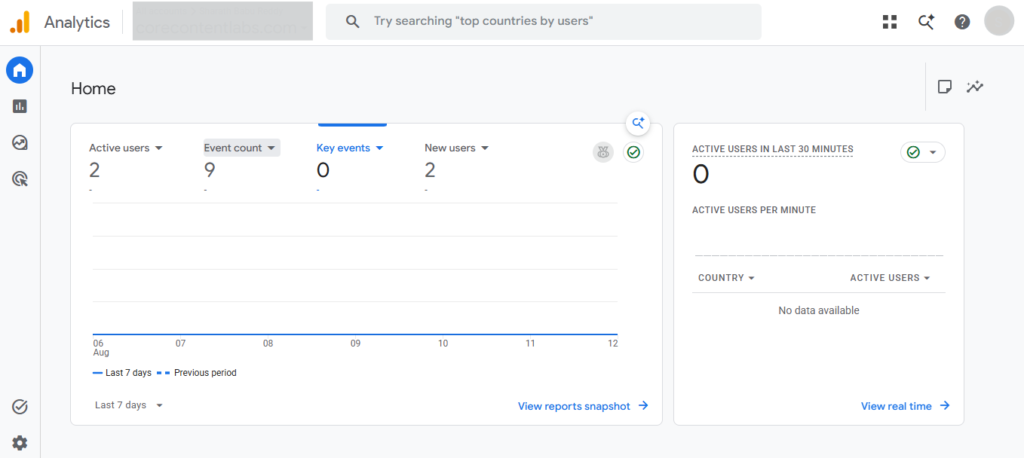
    Startups can monitor the following metric to analyze audience behavior:

    Users visited – Shows the number of users who visit the website.

    Traffic source – Shows where visitors come from, such as Google Search, social media, or direct visits.

    Page views – Shows how often pages or screens are viewed, helping startups identify content that receives more attention.

    Engagement time – Shows how much time visitors actively spend engaging with content.

    By analyzing these metrics, startups can identify what their audience is interested in and use those insights to create more relevant content.

    • Create useful content

    Once startups understand their target audience’s behaviour, it becomes easier to create content that is useful and relevant to them. The following tips can help startups create useful content:

    1. Create content that solves people’s problems.
    2. Make sure the content is easily accessible to the target audience.
    3. Publish content consistently.
    4. Maintain a high standard of content quality.

    Content published should focus on helping the audience rather than directly promoting product or services. By consistently publishing the high-quality content that solves real, problem startups can build trust and maintain long-term engagement with their audience.

    • Set clear goals

    A strategy without a goal is like a roadmap with no destination. You take actions and make decisions, but you don’t know why you are taking them or where they will lead. This can lead to wasted time, effort, and resources. Every content marketing strategy needs clear goals to guide content creation and measure its performance. Below are some common goals that startups can set for their content marketing.

    1. Brand awareness
    2. Provide solutions
    3. Generate leads
    4. Build trust
    5. Retention of existing customers
    6. Convert leads into sales

    For example, to build trust, a skincare startup can publish an article explaining how its products are made and what ingredients are used.

    • Choose suitable platforms

    In a world flooded with digital content and noise, identifying the right platforms to promote content and actively promoting it are very important tasks.

    Here are some tips startups can follow when choosing platforms and promoting their content:

    1. Choose one or two platform initially.
    2. Identify the platform where target audience are highly active.
    3. Create a proper and systematic approach to content promotion.
    4. Choose cost-effective platforms and promotional approaches.

    For example, a technology startup can initially use YouTube and LinkedIn to promote its content. YouTube can help the startup share educational videos and product demonstrations, while LinkedIn can help it reach business professionals and potential customers.

    • Review performance

    Instead of expecting immediate results, startups should regularly monitor their content performance. This allows them to understand what is working, identify areas for improvement, and make better content decisions over time.

    Below is the list of metrics startups can monitor to review performance of the content:

    1. Website traffic – The number of visitors coming to the website during a specific period.
    2. Traffic sources – Shows where website visitors come from, such as Google Search, social media, direct visits, or referral websites.
    3. Top-performing content – Identifies which content receives the most views or attracts the most visitors.
    4. Audience engagement – Shows how visitors interact with content, including how long they engage with a page and whether they return to the website.
    5. Social media engagement – Measures how people interact with content on social media through actions such as likes, comments, shares, and clicks.
    6. Search impression – The number of times a page or content appears in Google search results.
    7. Clicks – The number of times people click a search result or link to visit the website.
    8. Keyword rankings – Shows how well a webpage ranks for specific keywords in search engine results.
    9. Conversion rate – The percentage of visitors who complete a desired action, such as signing up, submitting a form, requesting information, or purchasing a product or service.

    Below are tools used to analyse the performance:

    1. Website and Traffic Analytics
      • Google Analytics – Shows Website visitors, traffic sources, audience engagement and top-performing content.
      • Google Search Console – Review search impression, click and search performance.
      • Matomo – Analyse website traffic and visitor behaviour.
    2. SEO and Content Optimization
      • SEMrush – Analyse keywords, search rankings, competitors, and SEO performance.
      • Ahrefs – Research keywords, backlinks, competitors, and organic search performance.
      • MarketMuse/Clearscope – Helps evaluate and optimize content for relevant topics and search intent.
    3. Social and Engagement Tracking
      • BuzzSumo – Analyse content performance and engagement across social platforms.
      • Buffer – Helps schedule social media posts and monitor their performance.

    By using these tools, startups can identify which content performs well, understand what their audience responds to, and improve future content based on these insights.

    Conclusion

    By reading this article, startups can gain a basic understanding of what content marketing is, why it is important, the common mistake that startups make and how to avoid them. Some of the main mistake that startups should avoid include not understanding their target audience, focusing only on selling, publishing content inconsistently, creating content without a clear goal, ignoring quality and failing to promote published content. Avoiding these mistakes can help startups create more useful content, build stronger relationships with their audience, and achieve better results from their content marketing efforts.

    Action steps:

    • Understand the behavior of your target audience using relevant tools.
    • Build content that solves people’s problems.
    • Set clear goals for your content marketing.
    • Identify the right platform based on your target audience.
    • Publish content consistently.
    • Measure and improve the performance of the content.

  • SEO for Startups in 2026: Strategies to Grow Organic Traffic and Brand Visibility

    As the world is evolving digitally growing startups require online presence to attract customers. In the growing competition right tools and process matters most to attract customers online. Which can be used constantly day in and day out to improve the online presence. Any ways these strategies do not guarantee success but provides a process to follow for achieving your goal. SEO helps optimize your website for the search engines like google understand content better and rank accordingly. It is a cost-effective way to rank your website on top in google search results which can drive organic traffic to the website and create brand identity to customers online. SEO can benefit any type of startups like e-commerce, manufacturing, services, Technology and healthcare, etc. Here is a guide that shows why SEO is important for startup and how these strategies provide steady growth.

    What is SEO?

    SEO stands for Search Engine Optimization it is a method of enhancing your chances of getting ranked higher during google search. There are steps you need to follow to get the website ranked higher in google search results like applying keywords in the post, providing internal links, external links, and adding suitable images for the post, etc. All these SEO steps help to boost the website and in turn provide good organic traffic.

    Organic traffic means visitors who reach your website through unpaid search engine results rather than paid advertisements. To get organic traffic for website you can implement SEO strategies. On other hand paid traffic is generated by social media advertisements or paid advertisements. We can get organic traffic to website using platforms like google, Bing and yahoo.

    Key Benefits of SEO:

    • Cost effective strategy.
    • Simple user-friendly steps.
    • Helps to rank the posts in search results.
    • Indirectly fetches Organic traffic.
    • Increases brand visibility.
    • Long term customers.
    • If used to good effect helps startups compete with big budget companies.

    Why Startups Need SEO?

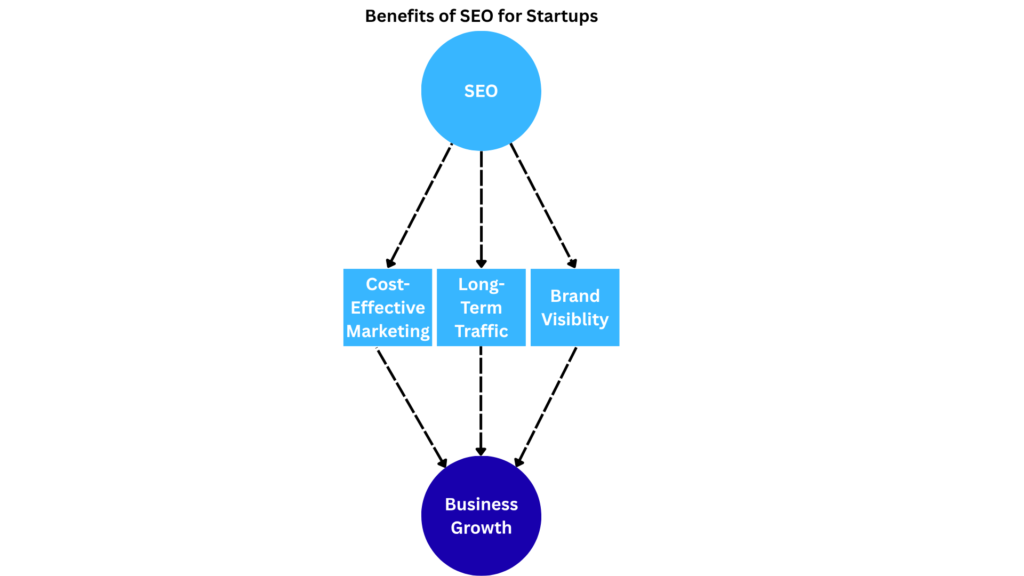
    • Cost-effective marketing

    Many startups operate with limited marketing budgets. In many cases, founders invest their own money to turn an idea into a product. During the early stages, most of the available funds are used for product development, operations, and business growth. As a result, there is often little or no budget left for marketing activities.

    SEO can help startups attract organic traffic without paying for every visitor. Unlike paid advertising, where businesses pay for each click, SEO focuses on improving a website’s visibility in search engine results. While SEO requires time and effort, it can generate long-term and sustainable traffic.

    When an advertising budget runs out, traffic from paid campaigns often stops immediately. However, a well-optimized website and high-quality content can continue attracting visitors for months or even years. This makes SEO a cost-effective marketing strategy for startups looking to build their online presence and reach potential customers.

    • Long-term traffic

    SEO is considered a long-term marketing strategy because quality content can continue attracting visitors long after it is published. Unlike paid advertising, where traffic often stops when the budget runs out, a well-optimized blog post can generate organic traffic for months or even years. As long as the content remains relevant and useful, it can continue appearing in search results and attracting potential customers.

    Long-term organic traffic helps businesses build lasting relationships with their audience. Visitors who find value in a website’s content are more likely to return when they need information, products, or services in the future.

    A simple way to understand this is to compare a website to a grocery store. If a store remains open consistently, customers know they can visit whenever they need something. Similarly, publishing valuable content on a regular basis encourages visitors to return and helps maintain a steady flow of traffic over time.

    • Brand visibility

    Most startups are unknown when they begin their journey. Therefore, increasing brand visibility is essential for attracting potential customers. One way to improve visibility is by publishing valuable content and using SEO strategies to rank higher in search engine results.

    For example, if a person searches for a wedding planner in Bangalore and your website appears on the first page of Google, there is a greater chance that they will visit your website. Even if they do not become a customer immediately, repeated exposure to your brand can increase familiarity and trust over time.

    People often trust brands they recognize because they may have used the product before, heard about it from others, or had a positive experience with it. Consistent visibility helps build this recognition. A good example is Rapido. Many people started using the service because it solved their transportation needs, even though they knew very little about the company itself. This demonstrates how strong brand visibility can influence customer decisions and contribute to business growth.

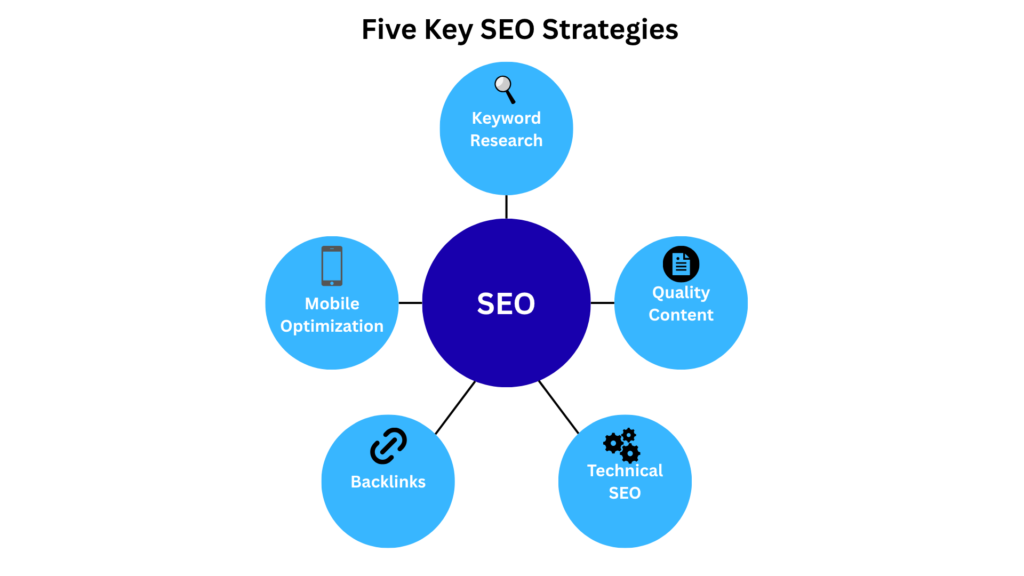
    Top SEO Strategies for 2026

    • Keyword research

    Keyword research is the foundation of any successful SEO strategy. A keyword is a word or phrase that users enter into a search engine to find information, products, or services. For example, a user looking for wedding planning services may search for “best wedding planner in Bangalore.

    Keyword research helps businesses understand what their target audience is searching for online. By identifying relevant keywords, startups can create content that matches user intent and improves their chances of appearing in search results. This can lead to increased organic traffic, greater brand visibility, and more opportunities to attract potential customers.

    Using the wrong keywords can make it difficult for a website to rank well. Even high-quality content may receive little traffic if it does not target terms that people actively search for. Therefore, choosing the right keywords is an important step in building an effective SEO strategy.

    • Quality content

    Quality content is created primarily to help people while also following SEO best practices. Before writing an article, it is important to understand the target audience and provide information that answers their questions or solves their problems. Content written only to include keywords, without offering value, is less likely to keep readers engaged.

    Google prefers helpful, reliable, and original content because its goal is to show users the most relevant information for their search queries. High-quality content is well researched, easy to understand, organized with clear headings, and based on accurate information.

    Bloggers should choose topics they are interested in, research them thoroughly, and write in their own words instead of copying or relying entirely on AI-generated text.

    For startups, publishing quality content can increase organic traffic, build trust with potential customers, improve brand visibility, and increase the chances of ranking higher in search results over time.

    • Technical SEO

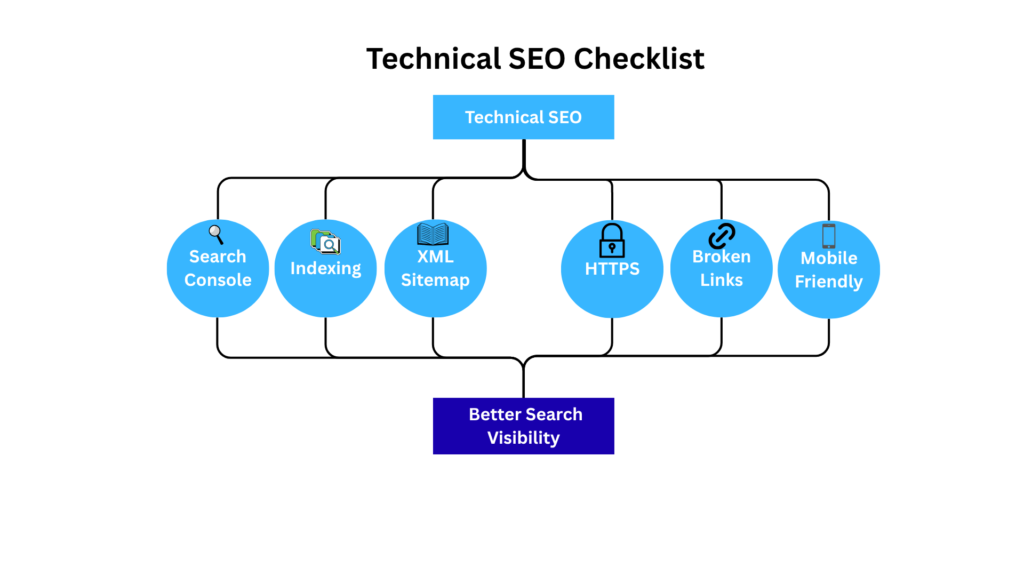
    Imagine you have written a high-quality blog article using relevant keywords and published it on your website. However, creating great content alone is not enough if search engines cannot easily find and understand your pages. This is where Technical SEO becomes important. Technical SEO focuses on optimizing the technical aspects of a website so that search engines can efficiently crawl, index, and rank its content while providing visitors with a smooth browsing experience.

    Some important Technical SEO practices include connecting your website to Google Search Console, requesting indexing for new pages, submitting an XML sitemap, enabling HTTPS security, improving website speed, ensuring mobile friendliness, and fixing broken links. These practices help search engines discover your content and make it easier for users to access your website.

    For startups, Technical SEO improves website performance, helps Google crawl and index pages more effectively, enhances the user experience, and increases the chances of attracting organic traffic over time.

    • Backlinks

    A backlink is a link from another website that points to your website or blog. For example, imagine you regularly publish articles about healthy diets. A fitness center owner finds your content helpful and includes a link to your blog on their website so their customers can learn about healthy eating habits. Visitors who click that link are directed to your website. This type of recommendation is called a backlink.

    Search engines may view backlinks from relevant and trustworthy websites as a positive signal that your content is valuable. As a result, quality backlinks can improve a website’s visibility in search results and help attract more organic traffic over time.

    Startups can earn quality backlinks by publishing useful, original content that other websites naturally want to reference. However, buying backlinks or receiving links from spam or unrelated websites is not recommended. For example, a healthy diet blog receiving backlinks from fitness or nutrition websites is more valuable than receiving links from an unrelated software website.

    • Mobile optimization

    Mobile optimization is the process of designing a website so that it works smoothly on smartphones and tablets. Today, many people use mobile devices to browse the internet, search for information, and shop online. Therefore, a website should provide a fast, simple, and user-friendly experience on smaller screens.

    A mobile-friendly website should load quickly, display text and images clearly without requiring users to zoom in, include easy-to-use navigation, and automatically adjust to different screen sizes. These features improve the overall user experience and encourage visitors to spend more time on the website.

    For startups, mobile optimization can increase visitor engagement, improve search engine visibility, and create more opportunities to convert visitors into customers. For example, a customer can easily browse and order books from a mobile-friendly bookstore website without needing to visit the physical store, making the purchasing process more convenient.

    Common mistakes

    • Keyword Stuffing

    Keywords help search engines understand the topic of a webpage but using them excessively can make content difficult to read. Some bloggers repeatedly use the same keyword, believing it will improve their rankings. However, this practice, known as keyword stuffing, creates an unnatural reading experience. Keywords should be included only where they fit naturally. The primary focus should always be on providing useful information and keeping readers engaged.

    • Duplicate Content

    Many bloggers may feel tempted to copy content from other websites or publish AI-generated text without reviewing or improving it. However, creating original content helps develop knowledge, writing skills, and credibility over time. Although writing from your own understanding requires more effort, it allows you to provide unique value to readers. Original content also helps build trust and establishes long-term authority in your niche.

    • Ignoring Mobile Users

    Many people access websites using smartphones, so ignoring mobile users can result in a poor user experience. If text is difficult to read, images do not display correctly, or navigation is confusing, visitors are likely to leave the website quickly. For example, imagine trying to order groceries online but finding the text too small and the product images unclear. Most people would leave and choose another website. Therefore, startups should ensure that their websites are mobile-friendly, with clear text, responsive images, simple navigation, and fast loading speeds.

    Conclusion: Startups Can Build Visibility with SEO

    This article is based on my learning experience while studying SEO. As a startup founder, understanding the basics of SEO can help you increase your website’s visibility and attract organic traffic without relying entirely on paid advertising. Throughout this guide, we explored the importance of keyword research, quality content, technical SEO, backlinks, and mobile optimization. Together, these strategies can improve your website’s chances of appearing in Google search results.

    SEO is not a one-time task but an ongoing process. Every new blog post should be reviewed for SEO before it is published. Startup founders with limited resources should focus on creating original, high-quality content that solves readers problems, optimize their website for mobile devices, and use tools such as Google Search Console to monitor indexing and website performance.

    SEO requires patience. Just as building a startup takes time and persistence, improving search rankings also requires consistent effort and continuous learning. The most valuable lesson I learned while writing this article is that simple SEO practices, when applied consistently, can help startups build long-term brand visibility and attract sustainable organic traffic.

    After reading this guide, startup founders can begin by:

    • Researching keywords related to their business.
    • Creating original, high-quality content for their audience.
    • Connecting their website to Google Search Console and requesting indexing.
    • Submitting an XML sitemap.
    • Optimizing their website for mobile users.
    • Continuing to publish useful content consistently.

    Want professional help with your growth strategy? Visit our Contact page to discuss your business goals.