
In the era of digital marketing, content creation has become the foundation of online marketing. Creating engaging content helps startups attract their target audience and build trust with potential customers. It is important for startup founders to create quality content and use it as a long-term marketing strategy. High-quality content is also easier for Google to crawl and index, which can improve a website’s visibility in search results. As a cost-effective marketing approach, content marketing helps startups reach more people and drive organic traffic to their websites.
A content must be seen as a tool to make an impression on the readers minds, but startups often make mistakes while creating a content. In this article we will explore the mistakes that startups make and learn how to minimize them during content creation.
What Is Content Marketing?
Content Marketing is the process of creating and sharing valuable content such as blogs, videos, social media posts, infographics, and articles to attract and engage potential customers. Unlike traditional marketing, which mainly relies on paid advertisements, content marketing focuses on educating and helping customers. It is one of the most cost-effective marketing strategies for startup founders because it helps build trust, increase brand awareness, and attract organic traffic over time.
How content can attract and educate potential customers
Imagine a startup founder opening an organic grocery store that sells products supplied by certified organic vendors. Since the business is new, the founder may not have a large budget to spend on television, newspaper, or billboard advertisements. Instead, the founder decides to use content marketing to promote the business.
The website regularly publishes blog posts explaining the health benefits of organic food, while social media pages share videos showing how the products are grown and supplied by trusted vendors. The website also introduces the vendors and explains where the products come from. This helps customers understand the quality of the products and builds confidence in the brand.
Although the business may not receive many customers immediately, consistently creating useful content can gradually build trust, increase brand awareness, and attract loyal customers over the long term.
Why Content Marketing Is Important for Startups

Startups can achieve the following benefits through content marketing:
- Build Trust
Customers are more likely to buy products from businesses they trust, regardless how good the product is. Developing content about the product show casing its advantages and usage capabilities over the website builds trust in customers. Referring to the example of the organic products store it built customer trust by posting videos showing how the products are grown and supplied by trusted vendors and explaining the health benefits of organic products. Similarly, startups need to focus on content planning to project the value of product to the customers who purchase it.
- Attracts potential customers
Once trust is established, startups need to convert interested visitors into potential customers. Conversion data serves as an indicator of how well the content engages and persuades potential customers. Content marketing is not a one-time activity; it is a continuous process of publishing valuable content on websites and social media platforms. This approach attracts potential customer while reducing marketing costs for startup founders.
- Increases brand visibility
New startups often struggle because very few people know they exist. Valuable content increases a startup’s brand visibility by helping more people discover its products, services, and expertise. As brand visibility increases, startups can strengthen relationships with existing customers while reaching new potential customers. Content marketing plays an important role by increasing awareness of the startup’s products, services, and brand among its target audience.
- Supports long-term growth
Sustainable growth requires consistent effort over time. Sometimes, startup founders focus so much on their current challenges that they forget to plan for the future of their organization. Every business should have a clear roadmap that outlines where it wants to be year after year. Planning for long-term growth is just as important as understanding the organization’s current position in the market. Valuable content serves as an engine for long-term growth by continuously attracting customers, building trust, and strengthening the startup’s brand.
Common Content Marketing Mistakes Startups Make

- Creating content without understanding the target audience
The purpose of developing a content is to serve the target audience with useful information. To serve them well startups should first identify their target audience and then understand their behavior using tools such as Google Analytics, Google Trends, LinkedIn, and Google forms (customer survey).
- Focusing only on selling
Startups often get carried away with planning content strategies. The primary purpose of the content is to solve the customer’s problem. In sales there is saying don’t try to sell, try to help the customers this stands true for even content marketing. Sales become a natural by-product of providing value to customers.
- Publishing content inconsistently
There are millions of pieces of content available on the internet, and thousands of new pieces are published every day. People often forget older content and pay more attention to recently published content. Publishing content regularly keeps the existing customer engaged; these existing customers can pull new customers with word of mouth.
- Creating content without a clear goal
For startups, every content strategy should have a clear purpose and a defined outcome. Having a clear goal helps content creators plan, measure, and improve their content strategy.
- Ignoring quality
Planning the structure of content is important, but the quality of what goes into it matters just as much. High-quality content includes:
- Clear purpose
- Accurate information
- Original content
- Good layout
- Relevant visuals
- Easy navigation
- Simple language
- Actionable takeaways
- Clear call to action
- Trying to be present on every platform
Startups often try to build recognition by creating content for every available platform. This strategy can become a double-edged sword, especially in the initial phase when startups have limited resources. Instead, they can focus on maximum one or two platform for content marketing. They may choose platforms such as Instagram, YouTube, LinkedIn, or Quora based on where their target audience is most active.
- Not promoting published content
Publishing valuable content is only the first step; startups also need to promote it to reach their target audience. Building a content promotion system early makes it easier for startups to grow consistently as they are in learning curve.
- Focusing only on short-term results
After putting significant effort into content marketing, startups may expect to see results quickly. However, no one can predict exactly when results will appear. Instead of expecting immediate success, startups should continue improving their products, processes, and content while remaining consistent.
How Startups Can Avoid These Mistakes

- Understand the audience
Startups can understand their target audience by using tools such as Google Analytics, Google Trends, LinkedIn, and Google Forms. Below is an example of how Google Analytics can help startups understand website visitors.
Google Analytics can help startups understand how visitors interact with their website.
A basic setup involves the following steps:
- Open Google Analytics and click ‘Start measuring’.
- Create an Account and Property with your business details.
- Select your business objectives and accept the terms.
- Select ‘Web’ and create a data stream.
- Connect Analytics to your WordPress site using Site Kit.
- Complete the Site Kit setup and connect your Google account.
- Once data is collected, use Analytics reports to understand your visitors.
After connecting Google Analytics to a website, startups can access a dashboard that provides an overview of visitor activity. The dashboard displays information such as active users, new users, events, and recent activity.
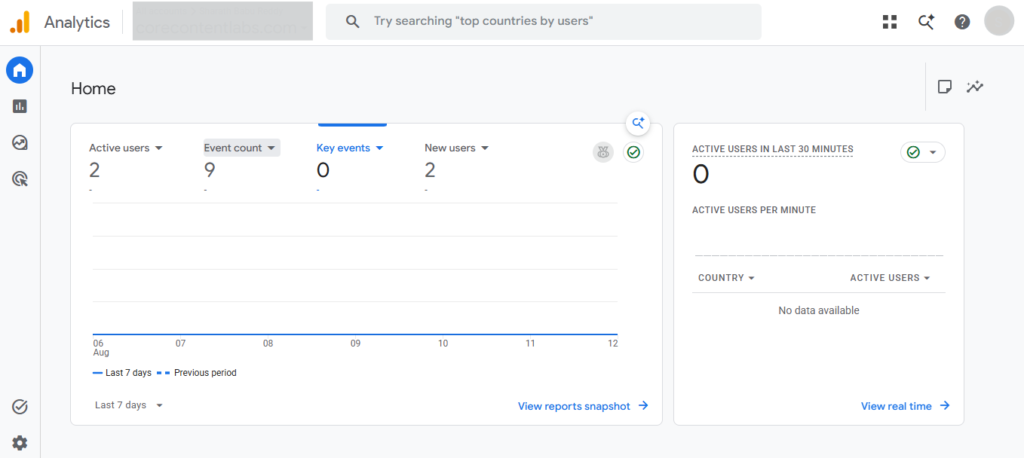
Startups can monitor the following metric to analyze audience behavior:
Users visited – Shows the number of users who visit the website.

Traffic source – Shows where visitors come from, such as Google Search, social media, or direct visits.

Page views – Shows how often pages or screens are viewed, helping startups identify content that receives more attention.
Engagement time – Shows how much time visitors actively spend engaging with content.

By analyzing these metrics, startups can identify what their audience is interested in and use those insights to create more relevant content.
- Create useful content
Once startups understand their target audience’s behaviour, it becomes easier to create content that is useful and relevant to them. The following tips can help startups create useful content:
- Create content that solves people’s problems.
- Make sure the content is easily accessible to the target audience.
- Publish content consistently.
- Maintain a high standard of content quality.
Content published should focus on helping the audience rather than directly promoting product or services. By consistently publishing the high-quality content that solves real, problem startups can build trust and maintain long-term engagement with their audience.
- Set clear goals
A strategy without a goal is like a roadmap with no destination. You take actions and make decisions, but you don’t know why you are taking them or where they will lead. This can lead to wasted time, effort, and resources. Every content marketing strategy needs clear goals to guide content creation and measure its performance. Below are some common goals that startups can set for their content marketing.
- Brand awareness
- Provide solutions
- Generate leads
- Build trust
- Retention of existing customers
- Convert leads into sales
For example, to build trust, a skincare startup can publish an article explaining how its products are made and what ingredients are used.
- Choose suitable platforms
In a world flooded with digital content and noise, identifying the right platforms to promote content and actively promoting it are very important tasks.
Here are some tips startups can follow when choosing platforms and promoting their content:
- Choose one or two platform initially.
- Identify the platform where target audience are highly active.
- Create a proper and systematic approach to content promotion.
- Choose cost-effective platforms and promotional approaches.
For example, a technology startup can initially use YouTube and LinkedIn to promote its content. YouTube can help the startup share educational videos and product demonstrations, while LinkedIn can help it reach business professionals and potential customers.
- Review performance
Instead of expecting immediate results, startups should regularly monitor their content performance. This allows them to understand what is working, identify areas for improvement, and make better content decisions over time.
Below is the list of metrics startups can monitor to review performance of the content:
- Website traffic – The number of visitors coming to the website during a specific period.
- Traffic sources – Shows where website visitors come from, such as Google Search, social media, direct visits, or referral websites.
- Top-performing content – Identifies which content receives the most views or attracts the most visitors.
- Audience engagement – Shows how visitors interact with content, including how long they engage with a page and whether they return to the website.
- Social media engagement – Measures how people interact with content on social media through actions such as likes, comments, shares, and clicks.
- Search impression – The number of times a page or content appears in Google search results.
- Clicks – The number of times people click a search result or link to visit the website.
- Keyword rankings – Shows how well a webpage ranks for specific keywords in search engine results.
- Conversion rate – The percentage of visitors who complete a desired action, such as signing up, submitting a form, requesting information, or purchasing a product or service.
Below are tools used to analyse the performance:
- Website and Traffic Analytics
- Google Analytics – Shows Website visitors, traffic sources, audience engagement and top-performing content.
- Google Search Console – Review search impression, click and search performance.
- Matomo – Analyse website traffic and visitor behaviour.
- SEO and Content Optimization
- SEMrush – Analyse keywords, search rankings, competitors, and SEO performance.
- Ahrefs – Research keywords, backlinks, competitors, and organic search performance.
- MarketMuse/Clearscope – Helps evaluate and optimize content for relevant topics and search intent.
- Social and Engagement Tracking
- BuzzSumo – Analyse content performance and engagement across social platforms.
- Buffer – Helps schedule social media posts and monitor their performance.
By using these tools, startups can identify which content performs well, understand what their audience responds to, and improve future content based on these insights.
Conclusion
By reading this article, startups can gain a basic understanding of what content marketing is, why it is important, the common mistake that startups make and how to avoid them. Some of the main mistake that startups should avoid include not understanding their target audience, focusing only on selling, publishing content inconsistently, creating content without a clear goal, ignoring quality and failing to promote published content. Avoiding these mistakes can help startups create more useful content, build stronger relationships with their audience, and achieve better results from their content marketing efforts.

Action steps:
- Understand the behavior of your target audience using relevant tools.
- Build content that solves people’s problems.
- Set clear goals for your content marketing.
- Identify the right platform based on your target audience.
- Publish content consistently.
- Measure and improve the performance of the content.
Leave a Reply