
As the world is evolving digitally growing startups require online presence to attract customers. In the growing competition right tools and process matters most to attract customers online. Which can be used constantly day in and day out to improve the online presence. Any ways these strategies do not guarantee success but provides a process to follow for achieving your goal. SEO helps optimize your website for the search engines like google understand content better and rank accordingly. It is a cost-effective way to rank your website on top in google search results which can drive organic traffic to the website and create brand identity to customers online. SEO can benefit any type of startups like e-commerce, manufacturing, services, Technology and healthcare, etc. Here is a guide that shows why SEO is important for startup and how these strategies provide steady growth.
What is SEO?
SEO stands for Search Engine Optimization it is a method of enhancing your chances of getting ranked higher during google search. There are steps you need to follow to get the website ranked higher in google search results like applying keywords in the post, providing internal links, external links, and adding suitable images for the post, etc. All these SEO steps help to boost the website and in turn provide good organic traffic.
Organic traffic means visitors who reach your website through unpaid search engine results rather than paid advertisements. To get organic traffic for website you can implement SEO strategies. On other hand paid traffic is generated by social media advertisements or paid advertisements. We can get organic traffic to website using platforms like google, Bing and yahoo.
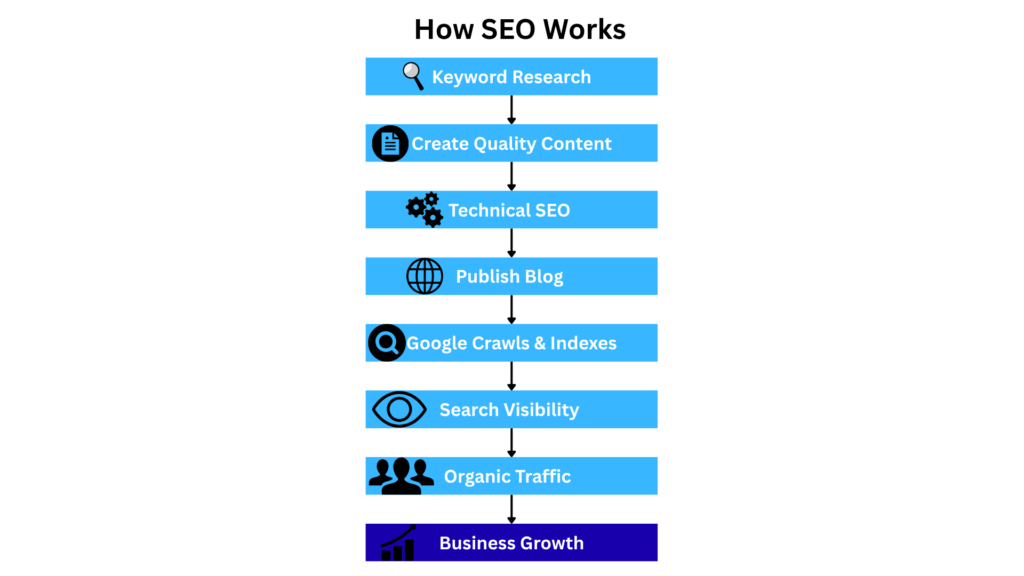
Key Benefits of SEO:
- Cost effective strategy.
- Simple user-friendly steps.
- Helps to rank the posts in search results.
- Indirectly fetches Organic traffic.
- Increases brand visibility.
- Long term customers.
- If used to good effect helps startups compete with big budget companies.
Why Startups Need SEO?
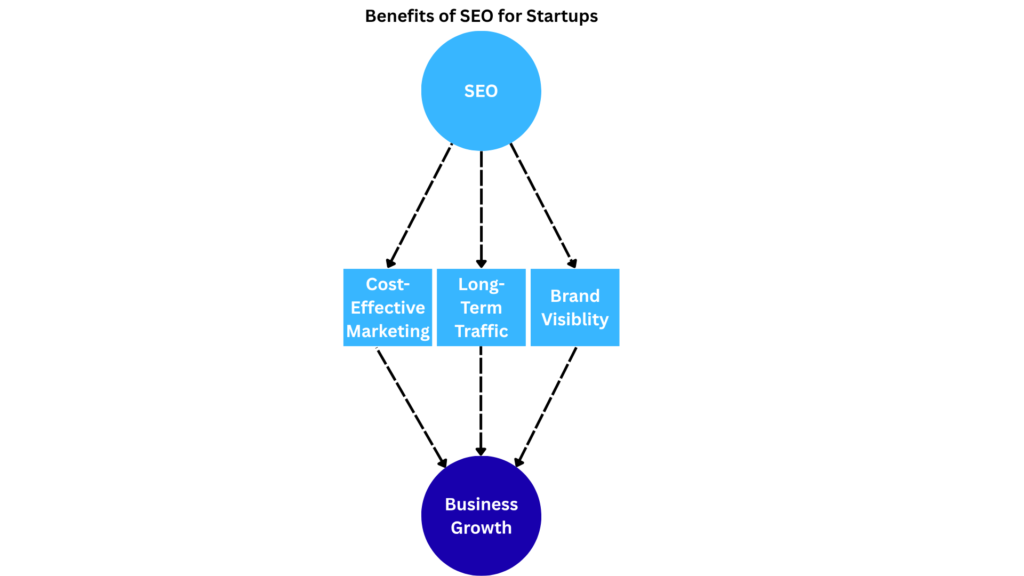
- Cost-effective marketing
Many startups operate with limited marketing budgets. In many cases, founders invest their own money to turn an idea into a product. During the early stages, most of the available funds are used for product development, operations, and business growth. As a result, there is often little or no budget left for marketing activities.
SEO can help startups attract organic traffic without paying for every visitor. Unlike paid advertising, where businesses pay for each click, SEO focuses on improving a website’s visibility in search engine results. While SEO requires time and effort, it can generate long-term and sustainable traffic.
When an advertising budget runs out, traffic from paid campaigns often stops immediately. However, a well-optimized website and high-quality content can continue attracting visitors for months or even years. This makes SEO a cost-effective marketing strategy for startups looking to build their online presence and reach potential customers.
- Long-term traffic
SEO is considered a long-term marketing strategy because quality content can continue attracting visitors long after it is published. Unlike paid advertising, where traffic often stops when the budget runs out, a well-optimized blog post can generate organic traffic for months or even years. As long as the content remains relevant and useful, it can continue appearing in search results and attracting potential customers.
Long-term organic traffic helps businesses build lasting relationships with their audience. Visitors who find value in a website’s content are more likely to return when they need information, products, or services in the future.
A simple way to understand this is to compare a website to a grocery store. If a store remains open consistently, customers know they can visit whenever they need something. Similarly, publishing valuable content on a regular basis encourages visitors to return and helps maintain a steady flow of traffic over time.
- Brand visibility

Most startups are unknown when they begin their journey. Therefore, increasing brand visibility is essential for attracting potential customers. One way to improve visibility is by publishing valuable content and using SEO strategies to rank higher in search engine results.
For example, if a person searches for a wedding planner in Bangalore and your website appears on the first page of Google, there is a greater chance that they will visit your website. Even if they do not become a customer immediately, repeated exposure to your brand can increase familiarity and trust over time.
People often trust brands they recognize because they may have used the product before, heard about it from others, or had a positive experience with it. Consistent visibility helps build this recognition. A good example is Rapido. Many people started using the service because it solved their transportation needs, even though they knew very little about the company itself. This demonstrates how strong brand visibility can influence customer decisions and contribute to business growth.
Top SEO Strategies for 2026
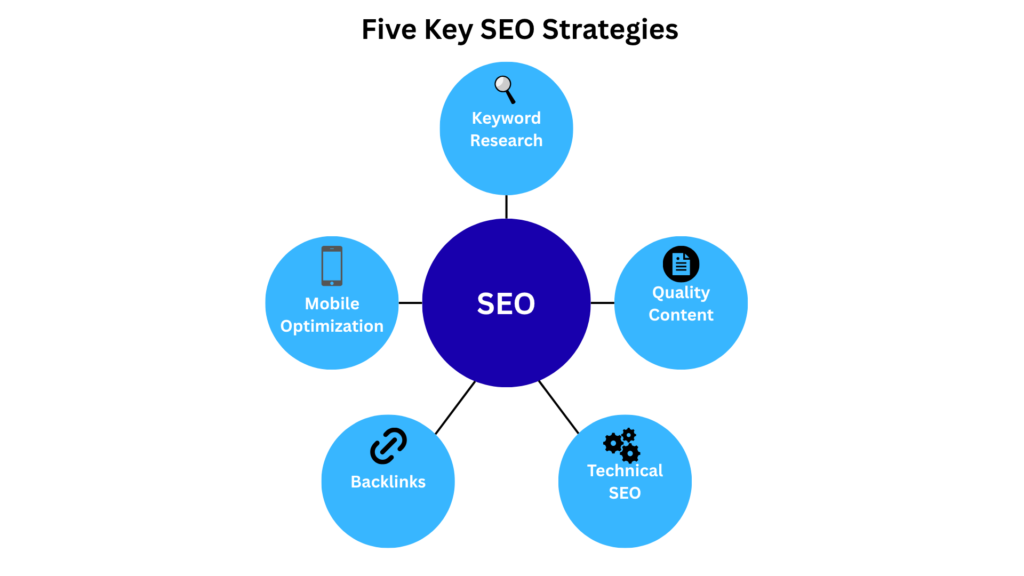
- Keyword research
Keyword research is the foundation of any successful SEO strategy. A keyword is a word or phrase that users enter into a search engine to find information, products, or services. For example, a user looking for wedding planning services may search for “best wedding planner in Bangalore.
Keyword research helps businesses understand what their target audience is searching for online. By identifying relevant keywords, startups can create content that matches user intent and improves their chances of appearing in search results. This can lead to increased organic traffic, greater brand visibility, and more opportunities to attract potential customers.
Using the wrong keywords can make it difficult for a website to rank well. Even high-quality content may receive little traffic if it does not target terms that people actively search for. Therefore, choosing the right keywords is an important step in building an effective SEO strategy.
- Quality content
Quality content is created primarily to help people while also following SEO best practices. Before writing an article, it is important to understand the target audience and provide information that answers their questions or solves their problems. Content written only to include keywords, without offering value, is less likely to keep readers engaged.
Google prefers helpful, reliable, and original content because its goal is to show users the most relevant information for their search queries. High-quality content is well researched, easy to understand, organized with clear headings, and based on accurate information.
Bloggers should choose topics they are interested in, research them thoroughly, and write in their own words instead of copying or relying entirely on AI-generated text.
For startups, publishing quality content can increase organic traffic, build trust with potential customers, improve brand visibility, and increase the chances of ranking higher in search results over time.
- Technical SEO
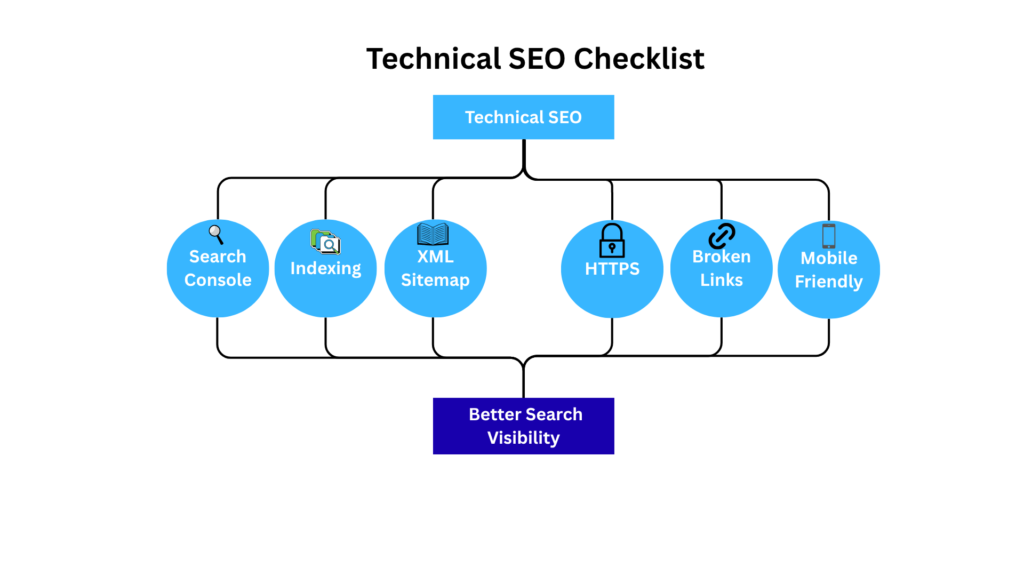
Imagine you have written a high-quality blog article using relevant keywords and published it on your website. However, creating great content alone is not enough if search engines cannot easily find and understand your pages. This is where Technical SEO becomes important. Technical SEO focuses on optimizing the technical aspects of a website so that search engines can efficiently crawl, index, and rank its content while providing visitors with a smooth browsing experience.
Some important Technical SEO practices include connecting your website to Google Search Console, requesting indexing for new pages, submitting an XML sitemap, enabling HTTPS security, improving website speed, ensuring mobile friendliness, and fixing broken links. These practices help search engines discover your content and make it easier for users to access your website.
For startups, Technical SEO improves website performance, helps Google crawl and index pages more effectively, enhances the user experience, and increases the chances of attracting organic traffic over time.
- Backlinks
A backlink is a link from another website that points to your website or blog. For example, imagine you regularly publish articles about healthy diets. A fitness center owner finds your content helpful and includes a link to your blog on their website so their customers can learn about healthy eating habits. Visitors who click that link are directed to your website. This type of recommendation is called a backlink.
Search engines may view backlinks from relevant and trustworthy websites as a positive signal that your content is valuable. As a result, quality backlinks can improve a website’s visibility in search results and help attract more organic traffic over time.
Startups can earn quality backlinks by publishing useful, original content that other websites naturally want to reference. However, buying backlinks or receiving links from spam or unrelated websites is not recommended. For example, a healthy diet blog receiving backlinks from fitness or nutrition websites is more valuable than receiving links from an unrelated software website.
- Mobile optimization

Mobile optimization is the process of designing a website so that it works smoothly on smartphones and tablets. Today, many people use mobile devices to browse the internet, search for information, and shop online. Therefore, a website should provide a fast, simple, and user-friendly experience on smaller screens.
A mobile-friendly website should load quickly, display text and images clearly without requiring users to zoom in, include easy-to-use navigation, and automatically adjust to different screen sizes. These features improve the overall user experience and encourage visitors to spend more time on the website.
For startups, mobile optimization can increase visitor engagement, improve search engine visibility, and create more opportunities to convert visitors into customers. For example, a customer can easily browse and order books from a mobile-friendly bookstore website without needing to visit the physical store, making the purchasing process more convenient.
Common mistakes
- Keyword Stuffing
Keywords help search engines understand the topic of a webpage but using them excessively can make content difficult to read. Some bloggers repeatedly use the same keyword, believing it will improve their rankings. However, this practice, known as keyword stuffing, creates an unnatural reading experience. Keywords should be included only where they fit naturally. The primary focus should always be on providing useful information and keeping readers engaged.
- Duplicate Content
Many bloggers may feel tempted to copy content from other websites or publish AI-generated text without reviewing or improving it. However, creating original content helps develop knowledge, writing skills, and credibility over time. Although writing from your own understanding requires more effort, it allows you to provide unique value to readers. Original content also helps build trust and establishes long-term authority in your niche.
- Ignoring Mobile Users
Many people access websites using smartphones, so ignoring mobile users can result in a poor user experience. If text is difficult to read, images do not display correctly, or navigation is confusing, visitors are likely to leave the website quickly. For example, imagine trying to order groceries online but finding the text too small and the product images unclear. Most people would leave and choose another website. Therefore, startups should ensure that their websites are mobile-friendly, with clear text, responsive images, simple navigation, and fast loading speeds.
Conclusion: Startups Can Build Visibility with SEO
This article is based on my learning experience while studying SEO. As a startup founder, understanding the basics of SEO can help you increase your website’s visibility and attract organic traffic without relying entirely on paid advertising. Throughout this guide, we explored the importance of keyword research, quality content, technical SEO, backlinks, and mobile optimization. Together, these strategies can improve your website’s chances of appearing in Google search results.
SEO is not a one-time task but an ongoing process. Every new blog post should be reviewed for SEO before it is published. Startup founders with limited resources should focus on creating original, high-quality content that solves readers problems, optimize their website for mobile devices, and use tools such as Google Search Console to monitor indexing and website performance.
SEO requires patience. Just as building a startup takes time and persistence, improving search rankings also requires consistent effort and continuous learning. The most valuable lesson I learned while writing this article is that simple SEO practices, when applied consistently, can help startups build long-term brand visibility and attract sustainable organic traffic.

After reading this guide, startup founders can begin by:
- Researching keywords related to their business.
- Creating original, high-quality content for their audience.
- Connecting their website to Google Search Console and requesting indexing.
- Submitting an XML sitemap.
- Optimizing their website for mobile users.
- Continuing to publish useful content consistently.
Want professional help with your growth strategy? Visit our Contact page to discuss your business goals.
Leave a Reply